Staff Writer
It was in the eighth month of my pregnancy when I started listening to Joseph Murphy’s book “The Power of the Subconscious Mind” in the podcast format. My doctor had advised me to walk 45 minutes everyday and the one hour long episode would last me through the entire walk. I thought, what better than to listen to a podcast while walking. The one message that the author keeps repeating is, if you want something to happen to you, start thinking of it all the time. When something is in your subconscious mind, it will happen.
The biggest thing that was going on in my mind at that time was that I have to deliver my baby through a natural birth or vaginal birth. Despite all the horror stories that I heard about women in labour rooms, I kept telling myself, I can do it, I will do it, till I could not…all thanks to this procedure called medical induction of labour. For the unaware, medical induction is where the body is induced into labour, in cases of emergency and when the woman is unable to go into labour naturally.
I was in the 38th week of my pregnancy, just one week shy of full-term, which is 39th week when I went to my doctor for a regular check-up. During the checkup she asked me to get an ultrasound done, just to be sure that everything is fine. During that scan they found that the amniotic fluid, the liquid protecting the baby in the mother’s womb had gone down to dangerously low levels. It was imperative that the baby be delivered as soon as possible. The doctor told me that I should get admitted the next day and they will “induce” me into labour. While I had read a bit about labour induction, I was not entirely sure of it. My doctor gave me the basic details, took the consent and I went all in. In a way, I was relieved that the baby was finally coming.
I informed at work that I’m getting admitted the next day, started my maternity leave and told myself, “I can do it…I will do it…”, Joseph Murphy says I can do it, I have also taken birthing classes and done prenatal yoga, how hard can it be, I won’t die and at the end of it and I’ll get to meet my baby. There is a very happy picture of me, at the time of admission in the hospital, smiling, making a victory sign. However, nothing could have prepared me for what was to come in the next 24 hours.
Once admitted, doctors started the induction process, which was by giving medications. After initiating the process, it is expected that the woman will go into labour in two-three hours and the pain will gradually keep increasing to reach a stage when she is ready to deliver vaginally, as it happens in the process of giving birth. Except, the pain in this process is induced medically and what happens as a result is the body’s natural pain coping mechanism does not work. All of this is something that I found out the hard way.
I spent 24 hours in pain, extreme pain and then unbearable pain, these were the only three stages, with just a few seconds of relief in between and the doctors would just keep increasing the level of pain by giving me stronger dosage of medicine.
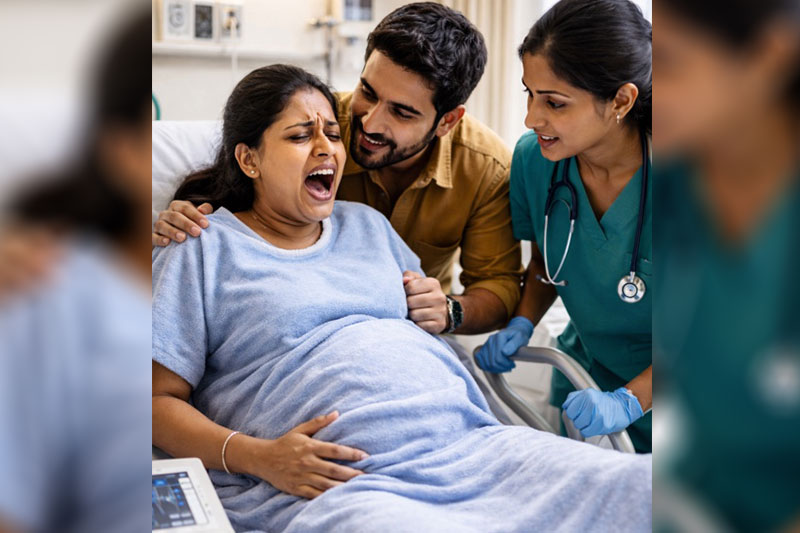
What added to the anxiety was my baby’s heart rate being constantly monitored. On one hand, they were giving me medicine in the form of drips and on another, the baby’s heart rate was being monitored. I kept seeing it go up and down on screen and my stress levels kept increasing. As my stress levels peaked, so did the baby’s heart rate.
Only one family member was allowed in the labour room and I requested that it be my husband, my mother won’t be able to see me in this state, I told them. She waited outside the labour room, worried sick. In between the senior doctors would come with their juniors and me crying in pain was a study subject for them. “The pain hasn’t increased that much right?”, said a junior doctor to her senior after looking at the monitor. “I am dying here and this is not much, I screamed!”… The nurses and my husband asked me to calm down.
I had downloaded my favourite songs and I thought listening to them would bring me some relief, but nothing did. Trust me! When my friends now ask me how much the pain was, I tell them to imagine their worst menstrual cramps and multiply it by ten. That’s how much! My body just wasn’t able to relax.
Even after all that time, when doctors could not get the desired results out of induction, I told the doctors to take me for a c-section delivery as I had no more energy left in me to bear the pain. “I would die, just get this baby out of me,” I screamed. Finally the baby arrived and everyone forgot about what had happened, including me.
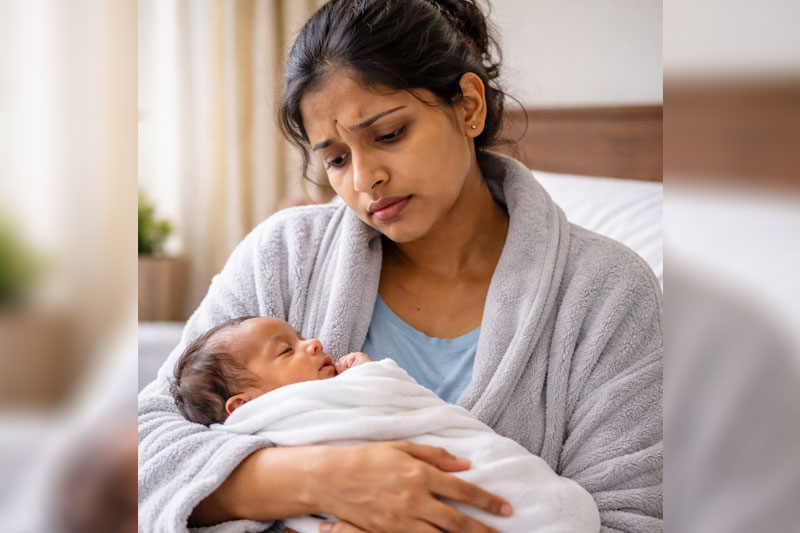
The experience was so traumatic that I had completely shut myself about it.
Cut to two months after the birth of my daughter, I broke down while narrating this story to a friend. She told me that her sister-in-law went through the exact same thing when the induction did not work and ultimately doctors had to perform an emergency c-section. Then I heard from a cousin about something similar happening to a family member. Suddenly I found out that this had happened to multiple women around me, they all had similar experiences. It was more common than I had imagined. In one particular case that happened to a close friend who gave birth after me, doctors gave her medicines to accelerate the process, but that also ultimately did not work and she went for a c-section.
What was common between all of us? We had no idea what we were getting ourselves into. All the birthing classes and prenatal yoga will prepare you for a vaginal birth but no one tells you how induction is going to be. We all went into it clueless, failed and took the other route. I still keep wondering to this day, was my mental strength not enough? Did I fail my body? No point asking these questions now anyway.
On digging deep on the subject, I found that even research shows medical induction fails in a number of cases and women ultimately need c-section. Some research also shows that the pain that women experience during induced labour, especially first time mothers, is much more than spontaneous labour.
A research paper published in the “Journal of Obstetrics and Gynaecology of India” said that “Labour induction is increasingly becoming one of the most common obstetric interventions in India.”
It studied the outcome of induced versus spontaneous labour in around 100 women. The research found that the rate of cesarean section was substantially higher in those patients who had been induced (58%) versus that for spontaneous labour (32%) and the rates of vaginal deliveries were notably higher in those who went into spontaneous labour.